Blogs
Discover five of the most exciting attractions in Kathmandu!
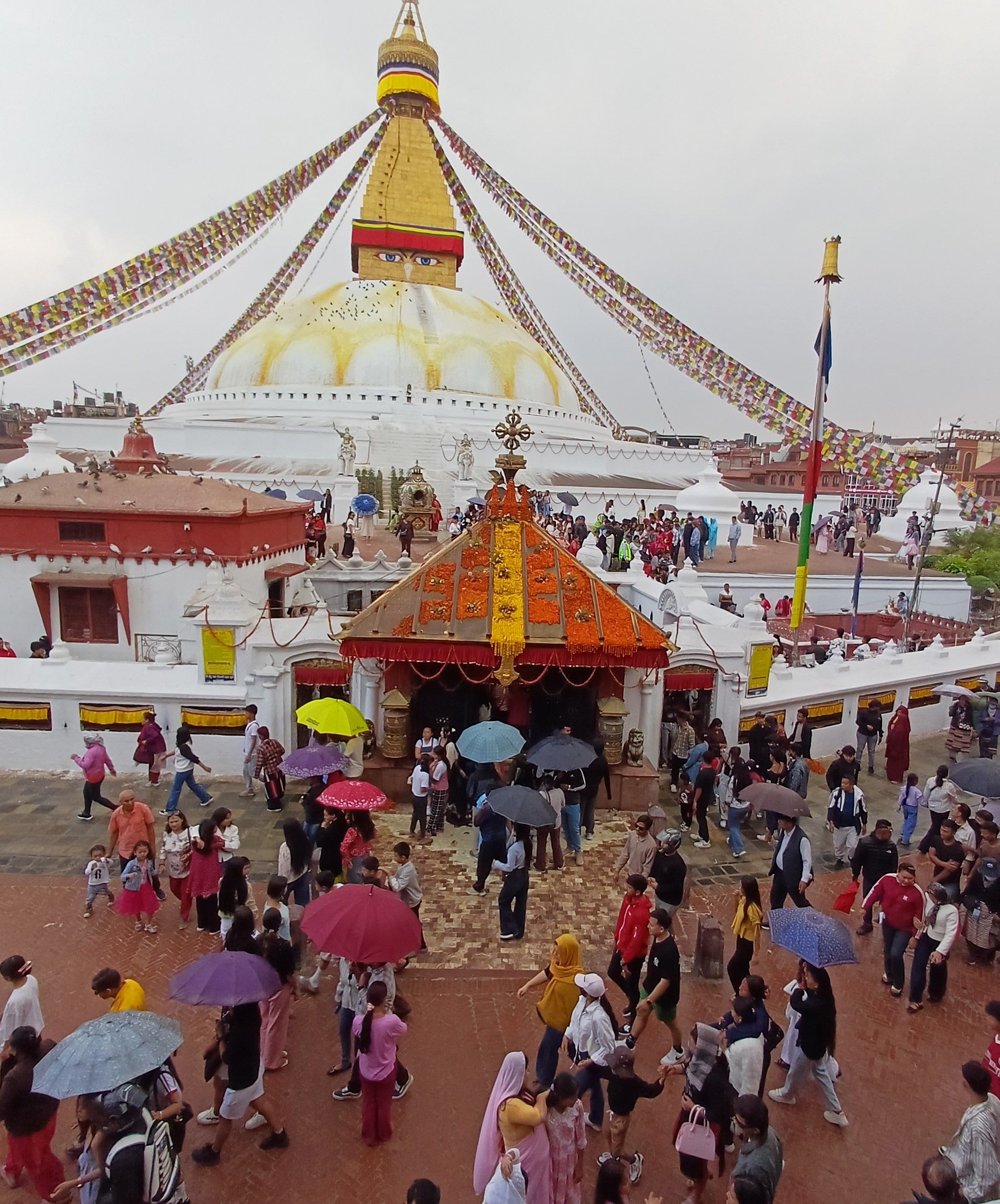
1.Boudhanath Stupa: Boudhanath Stupa is in Kathmandu and is a famous UNESCO World Heritage site. It is one of the largest round stupas in the world. Built between the 5th and 7th centuries AD, it is very important to Tibetan Buddhism in Nepal. The stupa has a large white dome with a gold spire on top. This spire has 13 levels, which show the steps to enlightenment. The stupa has Buddha’s eyes painted on it, which stand for wisdom and kindness.
Around the stupa, there are many monasteries and colorful prayer flags. These add to the lively spiritual feel. People know the site for the daily Kora, where devotees walk around the stupa in a clockwise direction. They chant prayers and spin the prayer wheels as they walk. Entry fees differ based on nationality: around NPR 500 for foreigners, NPR 100 for SAARC nationals, and free for locals and children.
2.Kathmandu Durbar square: Kathmandu Durbar Square is a remarkable ensemble of palaces, courtyards, and temples that were built between the 12th and 18th centuries. These structures once housed the ancient Malla kings of Kathmandu. A notable aspect of this site is a 17th-century stone inscription on the palace wall, which is written in 15 different languages. As a UNESCO World Heritage Site, Durbar Square serves as the focal point for the city's social, religious, and urban life. The palace also contains museums. Foreign visitors must pay an entrance fee of Rs. The ticket allows entry to all the museums within the Square. Typically, the entry fee for foreign tourists is NPR 1,000, for SAARC nationals it is NPR 500, and it is free for Nepalese citizens, with children under 10 also entering for free. Tickets, which provide access to the main square and museums, are valid for one day, and can be purchased at the main entrances.
3.Swayambhunath stupa: Swayambhunath, the ancient "Monkey Temple" stupa perched on a hilltop in Kathmandu, stands as a premier Buddhist pilgrimage site, renowned for its expansive white dome, golden spire, and the all-seeing Buddha eyes that gaze in four directions. Symbolizing enlightenment, it boasts 13 tiers, prayer wheels, shrines, and sacred monkeys, seamlessly blending Buddhist and Hindu worship. This 5th-century UNESCO site, known for its religious harmony, features the giant Vajra thunderbolt and is famous for its monkeys and steep stairs. The entrance fee is NPR 200 for foreigners, NPR 50 for SAARC nationals, and free for locals.
4.Pashupatinath Temple: Pashupatinath Temple is a significant 5th-century Hindu site located on the Bagmati River in Kathmandu, Nepal, dedicated to Lord Shiva as Pashupati, the "Lord of Animals." It is architecturally notable for its pagoda style, featuring a two-storied roof with copper and gold, silver-covered doors, and a large golden statue of Nandi, Shiva’s bull, facing the temple. The complex spans 246 hectares and contains over 500 smaller temples, ashrams, and shrines, functioning as a major religious hub for worship, pilgrimage, and cremation ceremonies. Entry to the main temple courtyard is restricted to Hindus, emphasizing its sacred nature. The temple is culturally important, hosting major festivals like Maha Shivaratri and Teej, which draw thousands of devotees. Additionally, entry policies differentiate between Nepalese and Indian nationals (free access) and other foreign visitors (NPR 1,000 fee), with non-Hindus barred from the inner sanctum. The site exemplifies the deep integration of spirituality, ritual, and cultural heritage in Nepal.
5.Budhanilkantha Temple: Budhanilkantha Temple, located at the base of Shivapuri Hill in Kathmandu, is a renowned open-air Hindu shrine famous for its colossal 5-meter-long reclining statue of Lord Vishnu, carved from a single black basalt rock. Dating back to the Licchavi period between the 5th and 7th centuries, the statue depicts Vishnu resting on the coiled serpents of Shesha Naga within a rectangular water pond, symbolizing cosmic sleep. The deity is intricately detailed with four arms holding a conch, disc, mace, and gem, embodying traditional iconography. The temple’s open-air design offers an unobstructed view of this magnificent figure, emphasizing its spiritual and architectural uniqueness. Beyond its Hindu significance, Budhanilkantha is also revered by Buddhists, reflecting religious harmony in the region. The temple draws large crowds during Haribodhini Ekadashi, celebrating Vishnu’s awakening, and is surrounded by smaller shrines dedicated to Shiva, Ganesh, and Saraswati. Notably, a royal taboo historically forbade the King of Nepal from visiting, rooted in local legend. Visitors are expected to dress modestly, and photography is often restricted to preserve the sanctity of the site.
Contact Us
Bouddha, Kathmandu, Nepal
9851082016
info@belmontadventure.com